

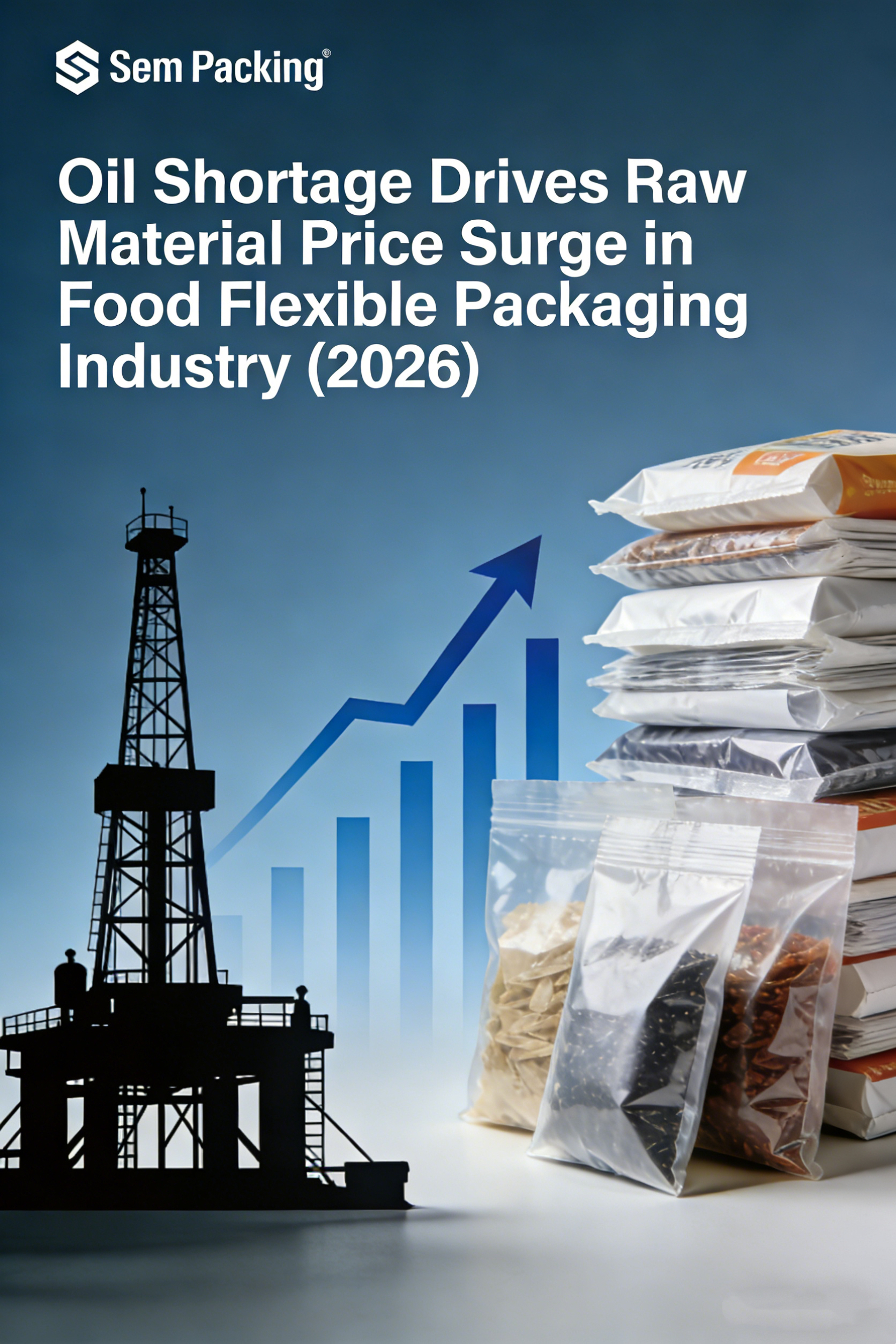
In early 2026, the global food flexible packaging industry is grappling with an unprecedented crisis: a severe oil shortage triggered by escalating geopolitical tensions in the Middle East has sent raw material prices soaring, sending shockwaves through the entire supply chain.
The Strait of Hormuz, a critical chokepoint handling about 20% of global seaborne crude oil, has been severely disrupted. This has led to a sharp contraction in global oil supply, with Brent crude prices surging by over 15% in a single week in March 2026, breaking through the $80 per barrel mark. As the “mother of chemicals,” crude oil is the foundational feedstock for nearly all plastic-based packaging materials. Every $10 per barrel increase in oil prices directly pushes up the cost of polyethylene (PE) and polypropylene (PP)—the core raw materials for food flexible packaging—by 300–500 yuan per ton.
This price surge has translated into a tangible supply crunch. Key producers in the Middle East, major suppliers of PE, PP, and methanol to global markets, have seen their exports disrupted. In Asia, LDPE and HDPE are now in acute shortage, with spot prices climbing steeply. Some grades of PP have seen price hikes exceeding 40% since the start of the year. Compounding the issue, planned maintenance shutdowns at petrochemical plants in China during March and April have further tightened domestic supply, creating a “one-good-is-hard-to-find” scenario in the spot market.
The impact is not limited to raw materials alone. Shipping costs have exploded: vessels are forced to reroute around the Cape of Good Hope, extending voyages by 15–20 days and pushing freight rates up by 250%–500%. War risk insurance premiums have skyrocketed by over 60 times, adding another heavy layer of cost. For food flexible packaging manufacturers, who typically spend 60%–70% of their total costs on raw materials, the combined effect has been catastrophic. Industry data shows that overall production costs have risen by 10%–18% compared to the beginning of 2026, severely eroding already thin profit margins.
Downstream, food producers and retailers are feeling the pinch. Many packaging suppliers have issued price adjustment notices or switched to a “one-order-one-price” flexible quoting model. Small and medium-sized food enterprises, which lack the bargaining power and inventory buffers of large corporations, are facing the greatest pressure. Some are reluctantly passing on the increased costs to consumers, while others are scaling back production or even suspending orders to avoid losses.
In response, the industry is exploring short-term coping strategies: manufacturers are optimizing material usage, switching to more cost-effective formulations, and adopting just-in-time procurement to minimize inventory risks. In the long run, this crisis is accelerating the shift toward sustainable alternatives. Investments in bio-based polymers, recycled plastics, and paper-based flexible packaging are gaining momentum as companies seek to reduce their reliance on fossil fuel-derived materials and build more resilient supply chains.
As the oil shortage persists, the food flexible packaging industry stands at a crossroads. The current price volatility is not just a temporary shock but a catalyst for fundamental change, pushing the sector toward greater sustainability and supply chain diversification in the years ahead.