

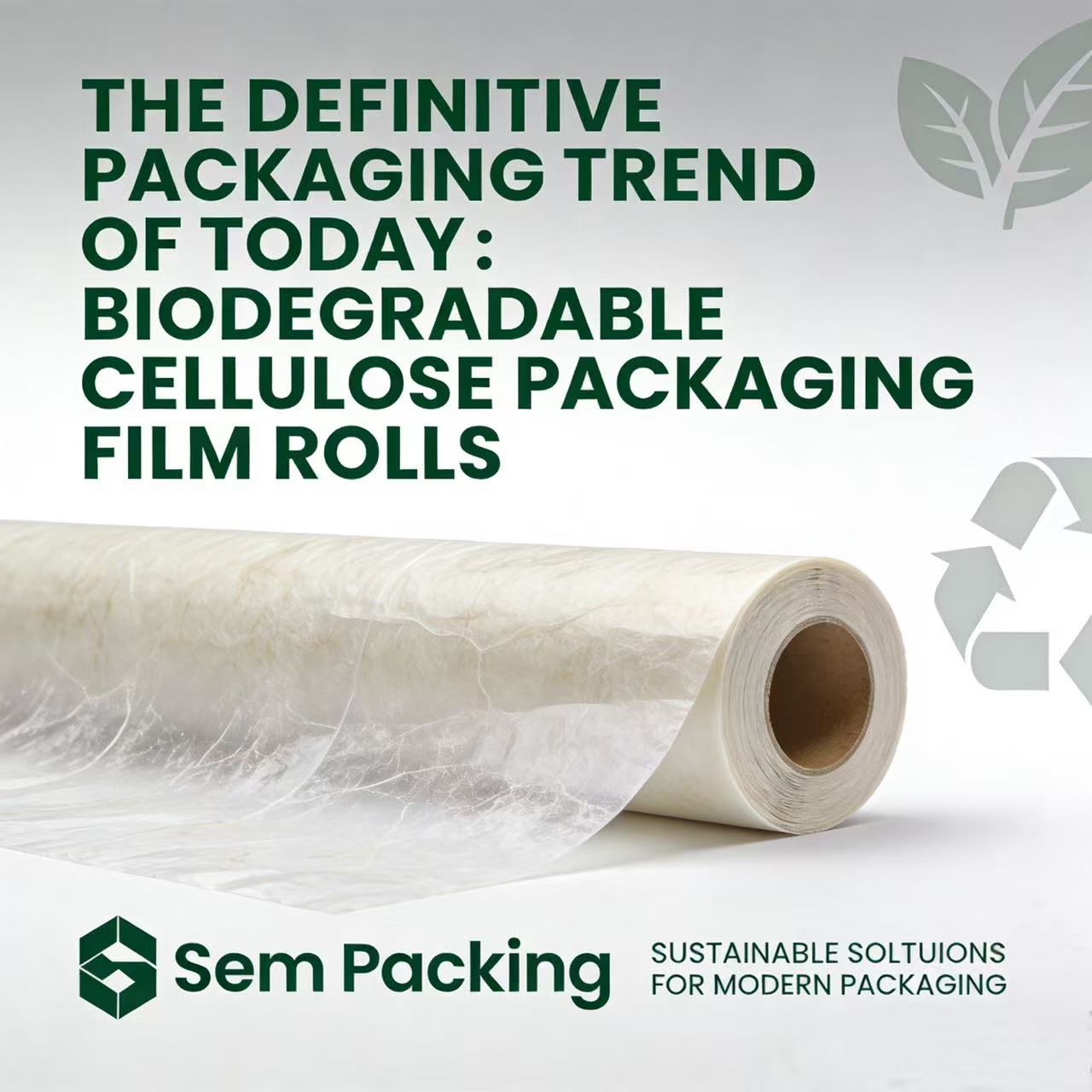
In an era defined by global sustainability mandates, rising consumer eco-awareness, and a collective push to eliminate single-use plastic waste, the packaging industry is undergoing a profound and irreversible transformation. Conventional plastic packaging, long favored for its low cost and versatility, has become a major environmental crisis, persisting in landfills and oceans for hundreds of years while harming ecosystems and wildlife. Amid this shift, biodegradable cellulose film packaging rolls have emerged not just as a niche eco-friendly alternative, but as the dominant, forward-thinking trend reshaping modern packaging across global industries. From food and beverage to pharmaceuticals, cosmetics, retail, and industrial applications, cellulose film rolls are redefining what sustainable, high-performance packaging can achieve, aligning environmental responsibility with functional excellence.
What Are Cellulose Film Packaging Rolls?
A Renewable, Eco-Friendly Core
Cellulose film packaging rolls are advanced flexible packaging materials derived from 100% renewable plant-based sources—primarily wood pulp, cotton linters, and other natural cellulose fibers, which are abundantly available and fully biodegradable. Unlike petroleum-based plastic films that rely on finite fossil fuels, cellulose films are bio-based, compostable, and designed to break down naturally in industrial composting facilities, home compost systems, and even natural environments without leaving toxic microplastics or harmful residues behind.
Key Drivers Pushing Cellulose Film to the Forefront of Global Packaging Trends
The rapid rise of cellulose film packaging rolls is no accident; it is fueled by a perfect storm of regulatory pressure, consumer demand, corporate sustainability goals, and technological innovation. Below are the core factors solidifying its status as today’s leading packaging trend:
1. Strict Global Regulations Banning Single-Use Plastics
2. Surging Consumer Demand for Eco-Conscious Brands
3. Corporate ESG Goals and Circular Economy Commitments
4. Technological Advancements Closing the Performance Gap
Global Market Growth: A Clear Indicator of Mainstream Adoption
The market data speaks volumes about cellulose film packaging’s explosive growth and mainstream acceptance. Valued at approximately USD 4.9 billion in 2026, the global cellulose film packaging market is projected to nearly double to USD 9.6 billion by 2036, growing at a healthy compound annual growth rate (CAGR) of 6.9%. This growth is driven by widespread adoption across key sectors, with food and confectionery packaging accounting for nearly 40% of total demand, followed by pharmaceuticals, cosmetics, and industrial packaging.
This robust growth confirms that cellulose film is no longer a niche sustainable option—it is a mainstream packaging solution chosen by businesses of all sizes, from small-scale brands to multinational corporations, seeking to balance sustainability, performance, and cost-efficiency as production scales and prices become increasingly competitive with traditional plastics.
Unmatched Advantages of Cellulose Film Packaging Rolls Over Traditional Plastics
*Full Biodegradability & Compostability
*Renewable & Sustainable Source
*Exceptional Clarity & Aesthetics
*Versatile Functional Performance
*Food-Safe & Compliant
*Easy Integration
Wide-Ranging Applications Across Industries
The versatility of cellulose film packaging rolls has made it a go-to solution across countless industries, further cementing its position as a universal packaging trend:
Food & Beverage
Pharmaceuticals & Healthcare
Cosmetics & Personal Care
Retail & Consumer Goods
Industrial & Agricultural